Tuesday, 9 June 2015

7 Tips for Avoiding a Nasty Stomach Bug Linked to Swimming

We’ve often seen news stories of cruise ship passengers returning to port after being sickened by a ‘stomach bug’ that produces nausea, diarrhea and vomiting. The culprit is usually norovirus, one of a group of viruses that affect the stomach and lining of the large intestine, and are responsible for most cases of gastroenteritis, according to the CDC. Norovirus illnesses sicken between 19 million to 21 million people every year.

AC-04019Originally called the Norwalk virus after the location of the first outbreak in Norwalk, Ohio, norovirus is not limited to cruise ships and can be transmitted anywhere people are in close quarters (such as nursing homes, day care centers or other public places). These viruses are stalwart and extremely contagious and are able to withstand extreme temperatures in water or on surfaces. Norovirus can survive in water for months or even years. People contract the virus by touching contaminated surfaces or through contaminated, raw or undercooked food or drinks. In a recent report, the CDC reported that norovirus may also be spread by people who are ill with norovirus who go swimming in lakes, rivers or pools and vomit or have diarrhea in the water. The water becomes contaminated and other swimmers who swallow the water become infected.

It is important to keep germs out of the water in the first place. Here are other things you can do prevent norovirus from making you or your family ill:

• Always wash hands carefully with soap and water after using the bathroom, changing diapers or before handling, preparing or eating food

• Keep young children (children younger than 10 years old) out of water that you suspect may be contaminated or water that has not been treated with chlorine. The risk is higher in ponds and lakes than in well maintained pools.

• Do not swim if you have been sick with diarrhea or vomiting, and do not allow children who have been sick to swim.

• Check diapers and take children for regular bathroom breaks. Be sure to stress no peeing or pooping in the water.

• Change kids’ diapers in a bathroom or diaper-changing area to keep germs away from the water.
• Avoid swallowing water from ponds, lakes or pools.

• If you have your own pool, monitor the water chemistry and maintain appropriate disinfectant levels. Check automatic chlorination systems to ensure that they are in proper working order.

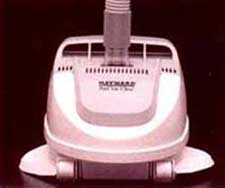
Hayward-Pool-Vac-UltraMyPool.com has all the equipment you need for testing your pool’s chemistry, and we sell many products to help keep your pool clean and properly disinfected. We sell test kits by Taylor, AquaChek and , All Clear. For assisting with pool chlorination we sell: Carefree Ionizers, Hayward and AutoPilot Chlorine Generators. For helping keeping your pool clean we have automatic cleaners from manufacturers like Hayward, Barracuda, Letro and Polaris. Also, be sure to keep your filter in top running condition, replace filter cartridges ever 2-3 years, Change your DE Powder and backwash your sand filter when the pressure increases 3-5 pounds above the clean pressure. At MyPool.com we have an array of chemicals help to simplify the process of maintaining balance and to ensure your pool is sanitary.

Take proper precautions, keep your pool clean and well-maintained, and have fun! Contact Mypool for affordable Hayward Pool Vac Pool Cleaner.

Follow My Pool Inc on:-
 
facebook twitter

Wednesday, 13 May 2015

Five Swimming-Pool Maintenance Tips That You Must Follow

Keeping your swimming pool sparkling clean does not have to be as troublesome as you might think. All swimming-pools are diverse, and so are their maintenance requirements. However, they all share one theme: the key to unspoiled swimming-pool health is regular maintenance. Although you left the job to a professional pool cleaning company, but still you need to do a few things to make sure your pool remains in great condition for years to come.

Skim debris and clean out baskets:

filters imagesSkimming the surface of your pool by hand in regular interval is the best thing you can do to keep your pool fresh and clean. Floating leaves and debris will eventually sink, becoming tougher to remove? Use a hand skimmer to take away bugs, leaves, and other undesired stuff. Skimming considerably improves the effectiveness of the swimming-pool’s circulation system and lessens the quantity of chlorine you will require to put into your pool.

Vacuum the swimming and brush tile and walls:

A pool must be vacuumed every week to keep water crystal clear and decrease the quantity of chemicals you require to put into it.

However, vacuuming is not the lone task that must be accomplished once a week. Brushing the walls and tile helps curtail algae buildup and calcium deposits so they don’t aggravate and become bigger issues.

Clean the swimming -pool filter:

There’re 3 types of swimming-pool filters: sand, cartridges and diatomaceous earth. While there are diverse maintenance procedures for each kind, all need periodic cleaning. Cleaning the filter reduces the chlorine consumption and keeps the pump running smoothly. However, regular cleaning of pool filter is not recommended as it can reduce the filter ability to filter fine particles. Instead, clean the filter when the pressure rise 3-5 pounds over the clean pressure.

Check and sustain the water level:

imagesA large amount of water will be lost during the swimming season due to evaporation, splashing and back washing. When the pool water level is set to the middle of the Swimming pool skimmer baskets and the skimmer door is functioning properly. Debris will be skimmed off the surface reducing the need to skim the pool and vacuuming the pool. Be sure to empty the skimmer basket, not doing so can damage the pool pump by restricting water flow to the pump.

Maintain the pH level:

Swimming-pool water must be tested on a regular basis to ensure it is properly balanced and sanitized. The pH is particularly important as it affects the efficiency of the chlorine. A reading between 7.4 and 7.6 is perfect, and 7.2 to 7.8 is acceptable in most cases. A Higher pH will reduce the chlorine ability to combat algae, bacteria and germs. Lower pH will cause the chlorine to be too active.

Follow My Pool Inc on:-
facebook twitter Googleplus

Monday, 11 May 2015

Automatic Pool Cleaners: What Features To Take Into Account

One of the necessary and frequent responsibilities that come along with owning a swimming-pool is cleaning it. However, if you possess a small pool or an inflatable pool, standard size automatic swimming-pool cleaners will prove to be too bulky and big for the task. Smaller areas need smaller pooHayward Pool Vac Pool Cleanersl cleaners. Often for small above ground or in-ground pools, manually cleaning may be the best choice. If you have a larger above ground pool Hayward’s AquaBug is an excellent choice, whereas for larger in-ground pools. Hayward Pool Vac Pool Cleaners are a time proven choice.
For smaller pools and spas, Pentair’s Rainbow Vac could be the ideal choice. This is a simple vacuum that is powered by your garden hose. As you manually move it along the bottom of your pool and spa dirt is picked up and collected into a bag above the cleaner. The bag is reusable and replaceable.
In brief, when it is about small pools or spas, selecting the ideal pool cleaner relies mainly on your own requirements. For smaller pools, manually cleaning the pool might be your best choice. At MyPool.com we have manual vacuums, as well as automatic pool cleaners for all types of pools.

Follow My Pool Inc on:-


facebook twitter

Sunday, 10 May 2015

Different Type of Swimming Pool Covers

There are 2 main uses of pool cover. First, a pool cover can decrease your swimming-pool’s maintenance expenditure, and second; a safety cover saves you or your children from serious mishap. There are a range of covers accessible, and you must discover one that meets your requirements. There are four main kinds of available pool covers. They are safety covers, winter cSolar pool coversovers, solar covers, and leaf nets respectively. Let’s have a look at them briefly:

Solar pool covers:

This type of cover will help save water and energy. They can raise the water temperature of your pool by an average of 10 degrees by soaking sunlight throughout the day and keeping that temperature in the swimming-pool at night. A solar pool cover will decrease your water and chemical evaporation by up to seventy percent, which can save a large amount of water every month.

Winter pool covers:

These kinds of pool covers are employed mainly to safeguard the swimming-pool from winter weather and to keep dirt, leaves and other debris from getting into the swimming pool. For an in-ground swimming pool, a winter pool cover is retained in place with water bags positioned around the border. Leaves are collected on the top of the cover. A winter pool cover also obstructs sunlight and prohibits algae build up. Most importantly, a winter pool cover is a crucial part of winterizing your swimming-pool, which makes your springtime activities much simpler and less costly.

Leaf net covers:
 Swimming pool skimmer baskets
These types of covers are very light in weight and help you reduce buildups of soaked leaves and twigs entering the pool as they are retained above your leaf net cover. This type of cover makes removal of leaves and other debris simpler than vacuuming the pool. .They can be put over solar or winter covers, extending the life of your solar or winter cover. They can be utilized in any season and are a huge aid if your swimming-pool is placed in a region enclosed by trees.

Safety pool covers:

Safety covers are the most expensive kind of pool cover. A safety pool cover is a safety fence over your swimming-pool. A safety pool cover is secured into the deck. There should be no gaps between the cover and the pool that could enable a child or pet to get under the cover and into the water. These types of cover offer the pool owner peace of mind that no kid falls into the swimming pool.

Mypool.com is a leading supplier of pool products offering amazing deals on all pool products. Also, find great deals on Swimming pool skimmer baskets, spa air blowers, swimming pool filters at Mypool.com

Follow My Pool Inc on:-

facebook twitter

Thursday, 16 April 2015

Significance of a Balanced Swimming Pool

Balancing the water is undoubtedly a critical step for the pool owner. Usually, comprehending water balance can be challenging. Balancing the pool and sanitizing the pool is not necessarily the same thing. A pool can be sanitary and not balanced. A balance pool should not be corrosive or scaling and be sanitary. A balanced pool will be kind to the skin and eyes, not scaling or corrosive and should not have the smell of chlorine.

These are reasons why having a balanced swimming pool is so vital:
Safety:

CH-00152AIf you’re employing either a salt-based swimming pool generating chlorine or a chlorine-based tablet swimming pool, then your pH requires to be accurate. If the pH isn’t balanced appropriately then the chlorine sanitizer would not be operating at full power killing bacteria and germs. The proper pH for comfort and sanitization is 7.4-7.6, Lower pH causes the chlorine to be too active and corrosive. Higher pH causes the chlorine to be less effective and possibly be the cause of scaling.

Comfortable:

Properly balanced pool requires all parameters be within an acceptable range. If balanced properly it will be pleasing to your eyes and skin. The pH must be neither too acidic nor basic to feel comfortable and should be free of chloramines. Chloramines are chlorine and ammonia combined. Chloramines are strong irritants and can be the cause the pool smells like chlorine. Water that is balanced and chloramines free will be comfortable to the eyes and skin.

Corrosion:

An imbalanced swimming-pool can be acidic to the hand rail, ladders, liner, and other gear such as the pool pump.

What is involved in water balance?

• Total alkalinity – total alkalinity or TA refers to how much alkaline is in the water. pH and TA go hand-in-hand. The average pool must have an alkalinity reading of 100 ppm. Higher for Vinyl or Fiberglas pools.

• Pool water pH levels – keeping the pH level of your swimming pool is essential. pH refers to the acidity of your swimming-pool water. An appropriate pH level is about 7.4-7.6 on a pH test tool’s numeric scale.

• Calcium solidity – the appropriate quantity of calcium in your swimming-pool is vital. If there’s too little, your plaster can wear away. Extreme amount of calcium can make your water become cloudy. 200-400 ppm is the common range for calcium hardness, whereas 300 ppm is perfect for the standard pool, lower for Vinyl or Fiberglas pools.

• Total dissolved solids: All water holds dissolved minerals. As swimming pool water evaporates, minerals stay behind and become concentrated. The more concentrated these minerals become, the harder it’s for chemical stabilizers to work and stains can form. If you’ve 3000 ppm or more of total suspended solids, you may require removing some water and replacing it with fresh water.

urlFor a detailed explanation of how these interact please see saturation index.

Please note: Water balance does not include chlorine or stabilizer. Stabilizer may contribute to alkalinity, but is not actually part of water balance.


The Taylor 2005 test kit has been a long time favourite of the pool industry.

For a complete line of swimming pool chemicals look to MyPool.com for your swimming pool chemical needs.

Follow My Pool Inc on:-
facebook twitter Googleplus

Monday, 13 April 2015

How to Clean the Skimmer & Pump Basket ?

Insuring the skimmer and pump basket are clean is essential for the proper maintenance of your pool. Blocked skimmer or pump baskets can restrict the water going into the pool. This can cause the pump to work harder and possible seal failure. Once the seal fails, the motor is likely to be damaged and result in failure of the motor.

urlClean baskets will allow your pump to work at maximum efficiency, cooling the pump and preventing seal failure. A damaged pump basket should be replaced. If not, debris that is allowed to get past the basket can clog the impeller, causing reduce water flow. Remember, a properly running pool pump will allow for proper circulation of chemicals and a sparkling clear pool. Clean the pump basket and skimmer at least once a week by following the guidelines below:

Sanitizing the pump basket:

• Switch off the heater; allow water in heater to dissipate the heat before turning off the pool pump.

• Turn off the booster pump, if one is installed.

• In some cases, shut skimmer and main drain valves.

• Remove the pump lid.

• Reach into the pump basket and remove as much debris as possible before removing the basket.

• Remove basket. Use a garden hose to clean the basket. If needed, inspect basket for cracks and basket integrity. Replace pump basket if necessary

• Reinstall pump basket. Don’t over squeeze the basket.

• Examine the pump lid and o-ring for damage or cracks and grease pump lid with a light coating of silicone grease. Make sure the o-ring is clean, a single leaf, grain of sand or hair can cause the lid not to seal properly.

• Put the lid back in place, Do not over tighten. If it is necessary for you to tighten the lid to get the pump to prime, the o-ring might need replacement.

• Open the skimmer and main drain valves if closed.

• Turn on the pool pump.

• Use filter air bleed valve to remove trapped air.

• Turn on Pool booster pump and heater.

Cleaning the skimmer basket:

BA-0107G• Turn off the pool pump

• Take away skimmer lid

• Take away skimmer basket and drain out

• Set up the basket back into the skimmer

• Set up skimmer lid and urn on the system

My pool is the leading suppliers of Swimming pool skimmer baskets, Swimming Pool Pump Baskets, swimming pool air blower, swimming pool filter parts and other essential pool accessories. Contact us to find the best deal available.
Follow My Pool Inc on:-
facebook twitter Googleplus

Facts to Consider Before Choosing a Filter for Your Swimming Pool

A swimming pool filter is used to remove debris from the pool. For this, you need a pool filter that is good in quality. In the far distant past it was not uncommon to drain the pool when the water quality deteriorated and refill it with fresh water. All pools today must have a properly sized and installed filter. The size of the filter is determined by determining the size of the pool in gallons and dividing it by Four Hundred and Eighty. The resulting number is the gallons of water that the filter must be capable of handling per minute (eight hours x 60 minutes per hour). For example: 80 GPM. The swimming pool pump must be capable of pumping this number of gallons. There are other factors that should be considered, but this discussion we will ignore them. The pump and filter are sized to the gallons of the pool, the pressure of the filter should be within the normal specifications for the filter. A larger filter will lower the operating pressure and increase the time in-between cleaning the filter.

There are three types of swimming pool filters, they are D.E, sand system and cartridge filters. Each has its own characteristics, cost, ease of use, and water quality.

Cartridge filters are made of paper like material, supported on a frame. When water comes into the filter, the debris is captured on the substrate and the clean water is passed back to the pool. The cartridge portion of the filter must be replaced periodically, typical every two to four years. While cartridge filters can be used on any size pool, larger pools require larger filters. Replacing these larger filter elements can be costly. Therefore, cartridge filters are best suited for small to medium sized pools.

While sand filters are less efficient than cartridges. There ease of use not having to buy replacement cartridges is a great economic advantage. Sand filters, water enters the top of the filter, flows downward through the sand and back to the pool. Sand filters are best for medium and large pools. If water quality is maintained properly the sand could easily last 5-10 or more years.

D.E. stands for diatomaceous earth, which’s the petrified remains of diatoms, a kind of hard-shelled algae. It’s rough and cruse texture makes it a great, organic filtration medium. D.E. filters produce the finest water quality. The D.E. powder is coated on to a nylon cloth material, the water is passed thru the D.E. thru the substrate and back to the pool. D.E filters are the most costly to buy and medium in cost for on-going expenses. They are best suited for medium to large pools.


Follow My Pool Inc on:-

facebook twitter Googleplus